 |
The Sasse: Where love stories develop between art and viewer | ||||
|
|||||
Walking Toward Wonder |
|||||
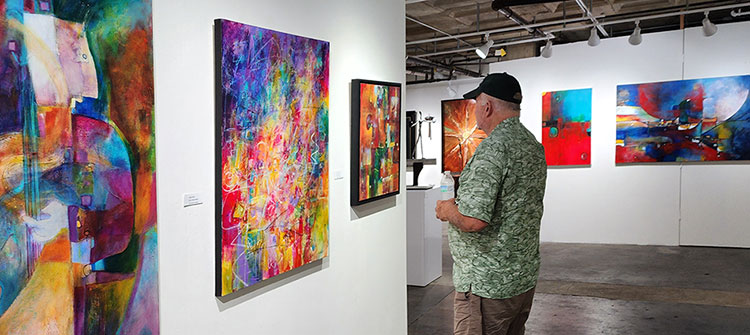
"The path to inspiration isn't marked—it appears only when you start walking toward wonder." You can't plan the route. There's no map showing you where to stand or what to notice. The path reveals itself only to those willing to move toward something they can't yet see clearly. An artist begins this way. Not with certainty, but with curiosity. They don't wake up knowing exactly what they'll create. They only know they're drawn toward something—a color that won't leave them alone, a question that keeps returning, a feeling they can't quite name. So they start walking. They pick up the brush, the camera, the clay. They begin. This is the part we rarely talk about: the artist doesn't know where they're going either. We see the finished work and assume they had a plan. But the truth is messier and more honest. They were following something, trusting that the way forward would reveal itself if they kept moving toward what intrigued them. Now you're standing in a gallery. You came here for... what exactly? Maybe you're not sure. Maybe you just knew you needed to be somewhere that isn't work, isn't home, isn't the daily routine. You started walking. This is how encounters develop between viewer and art. The artist walked toward wonder in creating the work. You walk toward wonder in experiencing it. Two journeys, separated by time, meeting at the same coordinates—not because anyone planned it, but because both of you were willing to follow what called to you. What remains is permission. Permission to wander. To backtrack. To skip entire rooms if they don't call to you. To stand in front of one work for twenty minutes while others walk past. To follow whatever compass wonder provides. Some visitors prefer structure—knowing what to see, understanding context, following a logical sequence. There's nothing wrong with that path. But wonder operates differently. It pulls you across the room to something you can't explain. It brings you back to a work you thought you'd finished with. It asks you to linger when logic says move on. |
|||||

|
|||||
|
|||||